
Agents Are Not Enough
This paper presents an analysis of AI agents, autonomous programs that can perform tasks on behalf of users. While current interest in AI agents is high, the authors argue that simply making them more capable isn’t enough for general adoption and success. They review the history of AI agents through five significant eras, each with its own approaches and limitations, and propose that solving technical challenges alone won’t be enough.
They mention three key mechanisms needed to address the challenges of agentic AI:
-
Private and Secure Agents: Ensuring user information protection while enabling agents to handle complex tasks.
-
User Representation (Sims): Creating a representation of the user that interacts with agents, reducing the need for constant user input.
-
Agent Communication: Allowing agents with knowledge of the user to negotiate with other agents on behalf of the user to complete tasks without additional burden.
To implement these mechanisms, a new ecosystem is proposed, consisting of:
- Agents: Specialized, autonomous modules designed for specific tasks.
- Sims: User representations that capture preferences and privacy settings, interacting with agents on the user’s behalf.
- Assistants: Programs that understand the user and coordinate between Sims and Agents to complete tasks effectively.
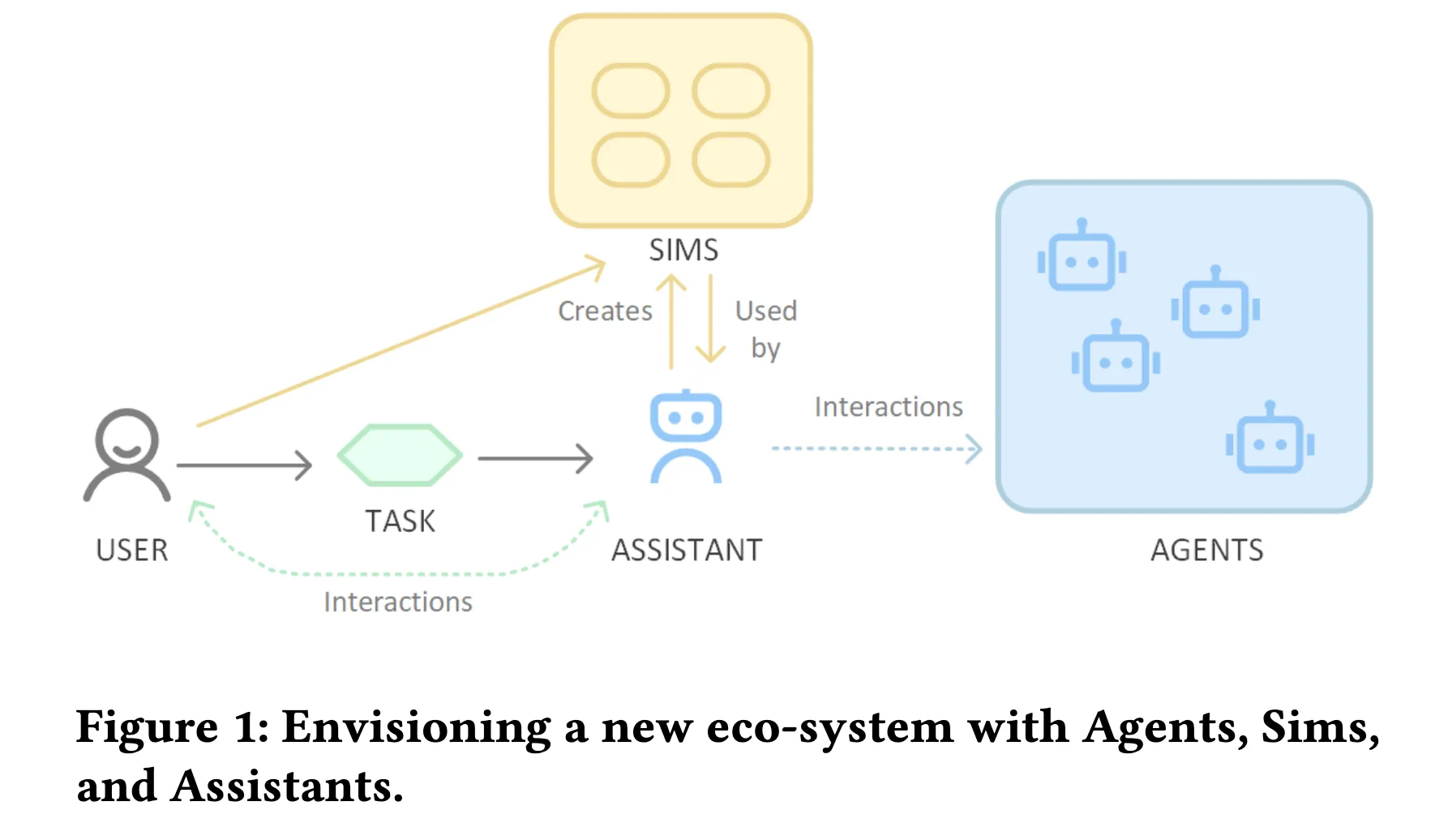
This ecosystem promotes synergy among Agents, Sims, and Assistants, ensuring tasks are performed with precision and personalization, ultimately enhancing user satisfaction.
The paper concludes that successful AI agents will require a complete ecosystem, similar to how app stores revolutionized mobile computing, rather than just focusing on making individual agents more powerful.
Work with Nazmi
Have a problem like this to ship?
The two-week AI Opportunity Audit turns it into a prioritized map, a 90-day roadmap, and one build-ready spec — a fixed-fee first step.
See the AI Opportunity Audit or book a 20-minute call →